The neonicotinoid imidacloprid impairs the predatory performance and functional response of the jumping spider Helpis minitabunda (Araneae, Salticidae)

  The neonicotinoid imidacloprid impairs the predatory performance and functional response of the jumping spider Helpis minitabunda (Araneae, Salticidae) Abstract The neonicotinoid imidacloprid can cause lethal and sublethal effects in non-target organisms, including impaired behavior, reduced fertility, disrupted locomotion, and reduced predatory performance in arthropods. Spiders are among the most abundant arthropod predators in terrestrial ecosystems, including agricultural ecosystems, yet the effects of neonicotinoids on the predatory function of jumping spiders remain poorly understood. The functional response of a predator describes how predation rates change with prey density and is key to understanding predator–prey dynamics. We tested whether acute exposure to a commercial formulation of imidacloprid at field-recommended concentrations alters the functional response of the Aussie bronze jumping spider, Helpis minitabunda (L. Koch, 1880). We compared the predation of treat...

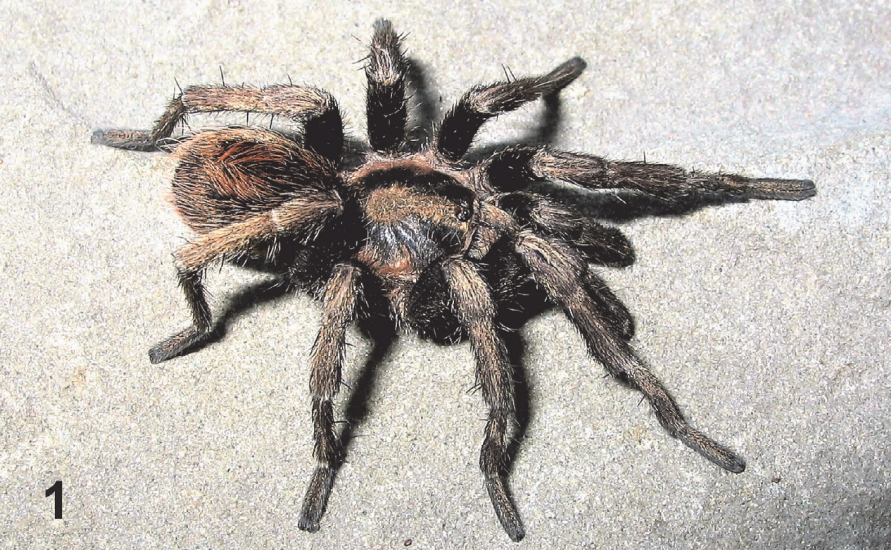
Urupelma humantay, a new species of Andean tarantula from the Cuzco region in Peru (Araneae: Theraphosidae: Theraphosinae)


Urupelma humantay, a new species of Andean tarantula from the Cuzco region in Peru (Araneae: Theraphosidae: Theraphosinae)

Abstract

A new Peruvian tarantula, Urupelma humantay sp. nov., from the Cuzco region is herein described, diagnosed and illustrated. The species is similar to Urupelma veronicae Kaderka et al., 2023, and U. dianae Kaderka et al., 2023, another two Andean tarantulas from the Cuzco region; it differs trom these two species in the absence of retrolateral keel in the morphology of palpal bulb, and in the different shape of seminal receptacles without sclerotized basal extensions. 

Kaderka, R. (2024b). Urupelma humantay, a new species of Andean tarantula from the Cuzco region in Peru (Araneae: Theraphosidae: Theraphosinae). Revista Ibérica de Aracnología 45: 20-26.