A Remarkable Discovery: Exploring a Rare Eresus and Spider Wasp Interaction

  Photo Credit: © Antonino Rametta . All photographs are used with permission. No part of these images may be reproduced, distributed, or used in any form without the prior written permission of the photographer. A Remarkable Discovery: Exploring a Rare Eresus and Spider Wasp Interaction One of the most rewarding aspects of maintaining Arácnido Taxonomy is hearing from naturalists and photographers around the world who take the time to share their discoveries. Every so often, an email arrives that immediately captures your attention. Not because it claims to rewrite what we know about biodiversity, but because it documents something that very few people have the opportunity to witness. Recently, I was contacted by a naturalist in Sicily who shared a series of exceptionally high-quality photographs of a female ladybird spider ( Eresus ) during what appeared to be an interaction with a spider wasp. Along with the images came a simple question: "Could this be scientifically import...

Simulating a hybridization event of a range-expanding sexual cannibal (Argiope bruennichi)


Simulating a hybridization event of a range-expanding sexual cannibal (Argiope bruennichi)

Abstract

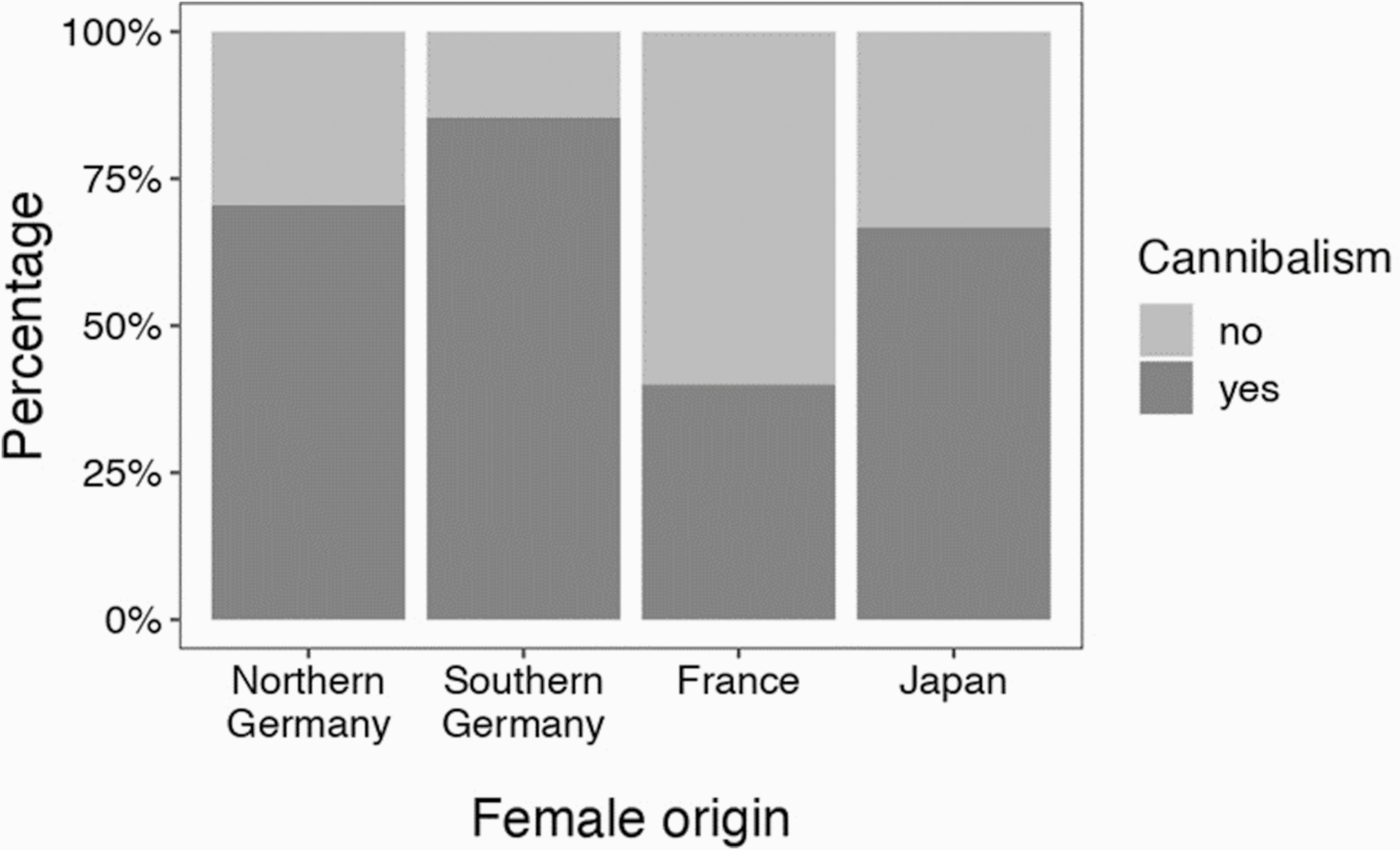
Hybridization plays an important role in animal speciation. Mediterranean populations of the Palaearctic wasp spider Argiope bruennichi have recently undergone a range expansion northwards. Adaptation to colder winters was facilitated by introgressed alleles derived from Asian populations, hence the resulting hybrids were able to expand geographically. Argiope bruennichi exhibits a highly complex mating system that includes strong sexual conflict and predisposes the species to behaviours that could facilitate directed hybridization and hybrid stabilization. To test this, we simulated a hybridization event with European and Asian spiders and a backcrossing event with southern and northern European spiders by conducting mate choice experiments and mating trials. We found pronounced differences in the cannibalism and monopolization successes between the populations. Asian male spiders were more successful in monopolizing European females than their European conspecifics and more successful than European males with Asian females. This would have led to an increased proportion of these specific offspring in the hybrid population. Our results suggest the mating system as a driving factor in the directional hybridization of Asian males and European females and the establishment of new northern European populations of A. bruennichi. We found no influences of the mating system on the stabilization of the resulting hybrid populations, probably owing to cold survival adaptations being a more important factor.


Sebastian Franke, Jutta M Schneider, Simulating a hybridization event of a range-expanding sexual cannibal (Argiope bruennichi), Biological Journal of the Linnean Society, 2024;, blae018, https://doi.org/10.1093/biolinnean/blae018