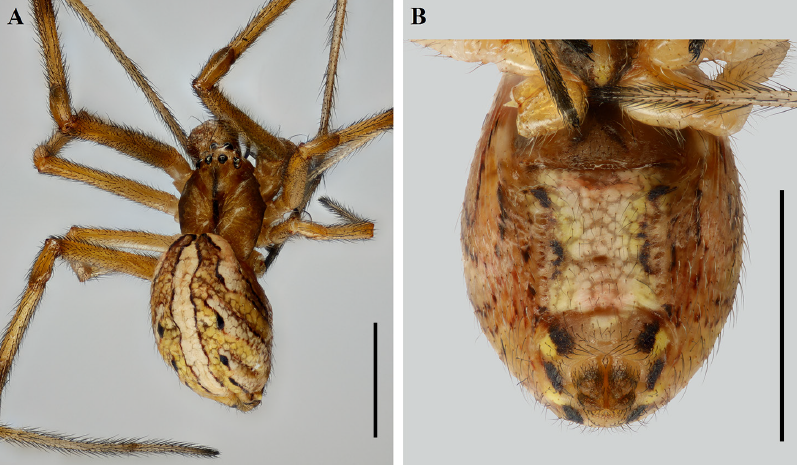
Hidden in the woods: A new species of Hexura (Araneae, Mygalomorphae, Antrodiaetidae) from a highly restricted range in Idaho
Hidden in the woods: A new species of Hexura (Araneae, Mygalomorphae, Antrodiaetidae) from a highly restricted range in Idaho
Hidden in the woods: A new species of Hexura (Araneae, Mygalomorphae, Antrodiaetidae) from a highly restricted range in Idaho Abstract A new species of Hexura Simon, 1885 is described from a very restricted geographic range in the Rocky Mountains of Idaho, 500 km east of the previously known distribution of the genus in the Coastal Ranges and western Cascade Mountains of Oregon and Washington. This work provides the first taxonomic information for this group in almost 50 years, including a phylogenomic framework for the genus within the mygalomorph superfamily Atypoidea , based on Ultraconserved elements ( UCEs ). Hexura vandal sp. nov . can be distinguished from the other two described species by a combination of morphological, molecular, and geographic characteristics. Lastly, we discuss the need for conservation actions to secure the survival of the species. Calatayud-Mascarell A, Briggs EJ, Hamilton CA (2026) Hidden in the woods: A new species of Hexura (Araneae, Mygalomo...
- Get link
- X
- Other Apps